Parakite vs Dune Glider
"An old paraglider is good enough for the dune" — that tip refuses to die. We see it completely differently. Here, Mike Küng and his team explain why flying close to the ground deserves modern, purpose-built gear.
What exactly is a dune glider?
Many pilots call the wing they fly at the dune a dune glider: soaring in the updraft right at the coast, just a few meters above the ground, in constant contact with sand, water, and slope. Anyone who wants to try dune flying often reaches for an old, retired paraglider — it's sitting in the basement anyway.
The parakite is the logical evolution of that idea: a wing built from the start for exactly this low-level, dynamic flying — with new fabric, properly trimmed lines, and a design tuned for soaring, diving, and groundhandling.
We are aware that a lot of sand and sea or salt-water moisture does no wing any real good. But if you handle your gear with care, a day at the beach won't do it any great harm.
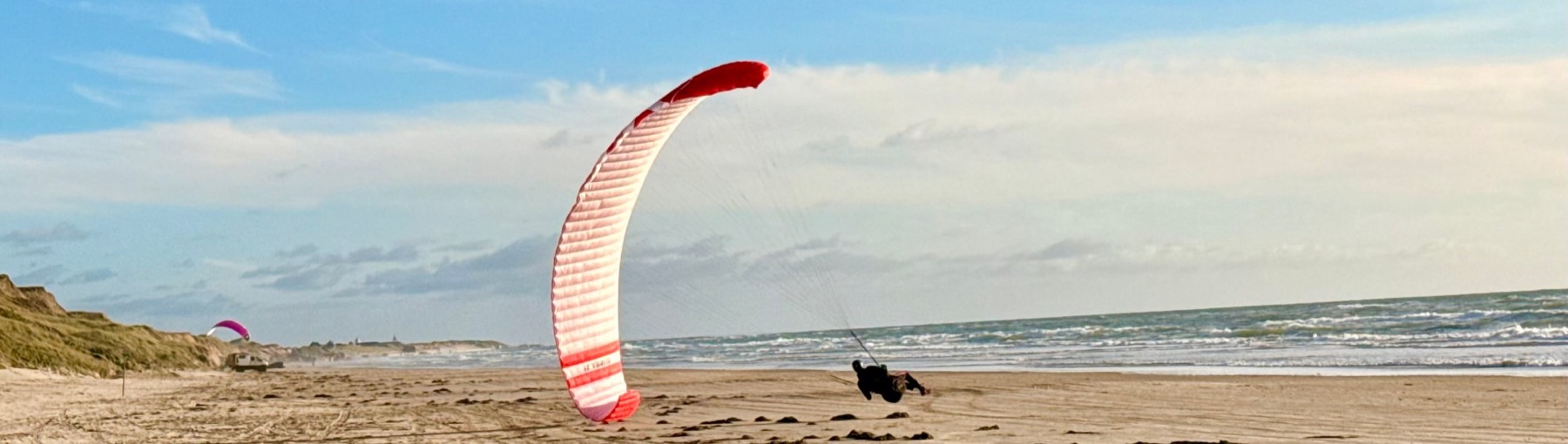
Old wings should not be flown.
A retired paraglider is rarely retired without a reason. When flying at the dune, the ground is always close — there's no altitude left to make up for mistakes. Three points make us especially skeptical:
Poor fabric values
Paraglider fabric ages: UV light, moisture, sand, and load wear down its strength and air-tightness over the years. A wing with poor fabric values behaves differently than you expect — and that's the last thing you want just above the ground.
Lines no longer properly trimmed
Lines stretch and shrink unevenly. When they're no longer trimmed cleanly, angle of attack and handling change noticeably. When soaring at the dune, there's hardly any time to compensate.
Yesterday's technology
An old paraglider was built for a different purpose — and is often far behind in terms of development. Modern parakites are made for low-level, dynamic flying and are continuously developed for exactly that.
Of course you can go to the dune with an old paraglider.
We don't want to forbid anyone anything. But development is clearly heading in one direction: toward the parakite. Dune flying isn't something for a few wild pilots who recklessly hang themselves under an old wing.
With today's technology and the state of parakite development, newcomers can be introduced to dune flying and soaring with a clear conscience — for example with our beginner parakite, the SPIKE. Forgiving handling, gentle reactions, and still real flight feel.
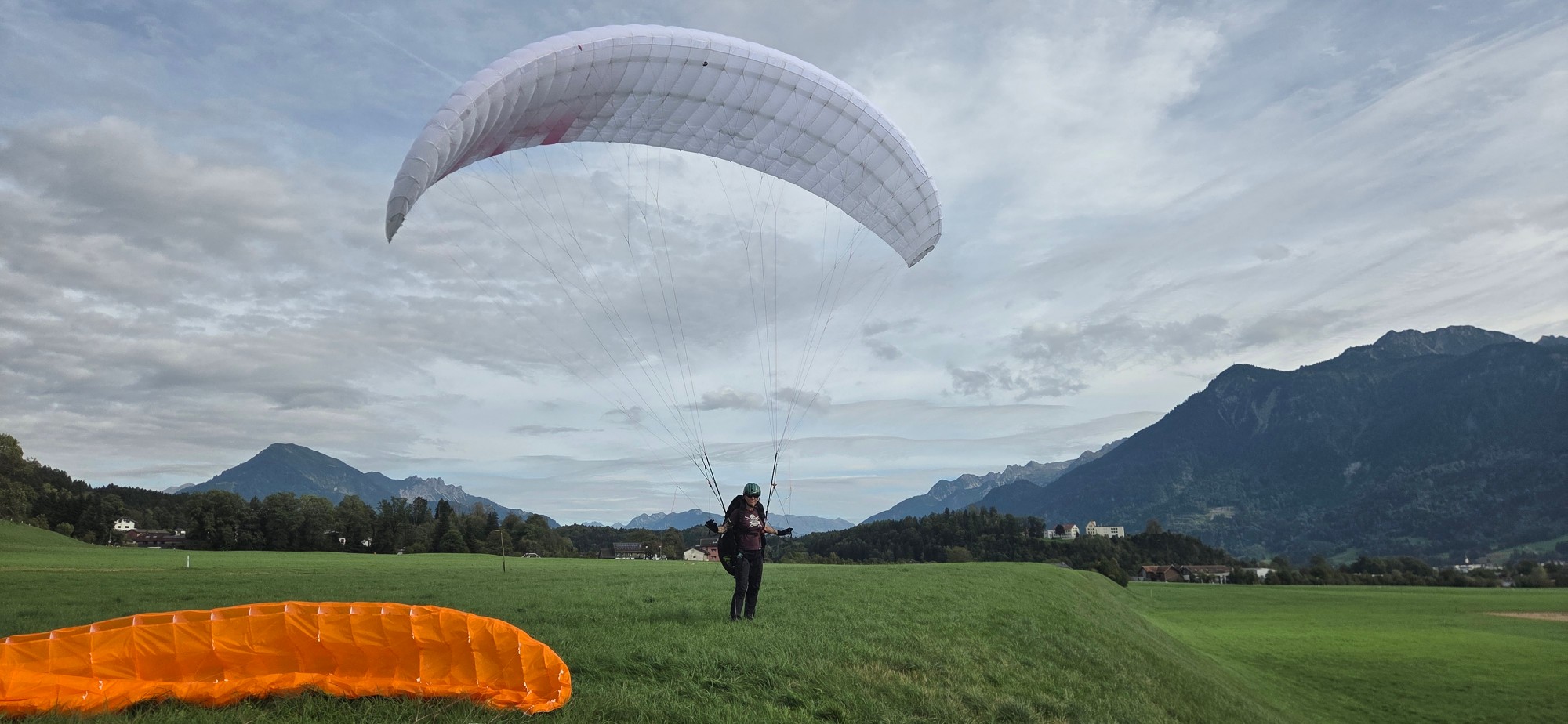
Old dune glider or parakite?
| Feature | Old paraglider as a dune glider | Parakite (SPIKE, SUPRA, SICARIO) |
|---|---|---|
| Built for | Cross-country and thermal flying at altitude | Low-level, dynamic flying: soaring, diving, groundhandling |
| Fabric condition | Often aged, fabric values usually unknown | New fabric (e.g. NCV F09017 1580) |
| Lines | Often stretched, no longer trimmed correctly | New, color-coded lines, cleanly trimmed |
| State of development | Old, no longer up to date | Current, continuously developed design |
| Starting out | Not designed for this purpose | The SPIKE is a dedicated beginner parakite (Level A/A+) |
Groundhandling first, dune second.
Whether parakite or paraglider: anyone who wants to fly at the dune should master their gear on the ground. In our groundhandling courses with Mike Küng and his team, you learn what your wing does — so you can apply it in the air. It's the best preparation for dune flying and soaring.
Go to the CoursesNote: parakites are currently not certified or approved aircraft. Use is at your own risk — background on our Safety page.
Questions about dune flying?
Write to us — we'll advise you on parakites, getting started, and groundhandling.
Get in Touch